
Why returning from short-form video to focused desk work often feels unusually hard — and how stimulation levels may play a role.
Picture this: you have been grinding through a quarterly report for forty minutes. Your eyes ache. You reach for your phone and open a short-video app. Within seconds, faces flash, music shifts, and something new appears before you can blink. For seven minutes you ride a wave of micro-rewards. Then you close the app, reopen the spreadsheet, and everything feels grey.
That flat, reluctant feeling is not necessarily a personal failing. Your mind may be comparing two very different levels of stimulation. When the gap is large, calmer tasks can feel harder to start — a pattern discussed in workplace habit literature, sometimes called stimulation or dopamine contrast.
Popular-science writing often mentions dopamine when describing reward and novelty. We use the term here descriptively to explain everyday attention habits, not as a medical or neurochemical claim. If you have concerns about focus, mood, or screen use, speak with a qualified professional.
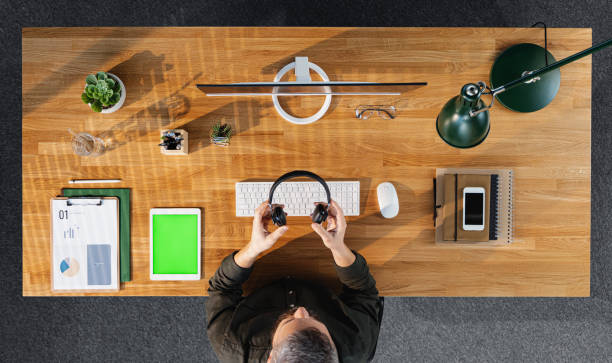
Here is a commonly suggested guideline in workplace habit articles: choose rest that is less stimulating than the work you return to, not more entertaining. Many people do the opposite — reaching for the most stimulating content on their phone after a demanding session.
Lower-stimulation rest can look simple: a short walk without earbuds, a few minutes of stillness, or sitting outside. These activities may keep stimulation moderate so that a data entry task feels more approachable when you return — though experiences differ.
If your work is already high-stimulation — trading floors, emergency response, live events — your break might include calm social contact or gentle movement rather than total silence. The principle stays the same: do not leap from intense work to hyper-intense leisure. Step down the ladder, then climb back to work.
| Break Type | Stimulation Level | Return to Desk Work |
|---|---|---|
| Short-video scrolling | Very high | Often difficult |
| Quiet walk | Low | Usually smooth |
| Wall gazing / stillness | Very low | Generally easy |
| One calm song, eyes closed | Low–medium | Moderate |
Set five minutes on your phone, but use it only for a breathing exercise or step count — not feeds. The phone stays in your hand; the stimulation profile changes completely.
High-novelty content fits better as a deliberate end-of-day activity when no cognitively heavy task follows immediately.
Switch to greyscale mode during work blocks if colour-heavy apps pull you in. Lower sensory input on breaks too — dimmer room, softer light.
Saying "this is contrast, not failure" removes shame and lets you pick a better break next round instead of forcing grit through a depleted state.
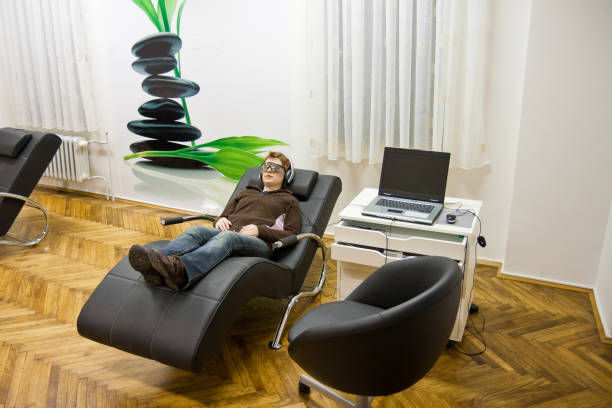
Afternoons collapse for many knowledge workers because morning focus spends neural budget and lunch breaks often spike stimulation with news, videos, or heated messages. By two o'clock the contrast game is already lost.
Try structuring lunch as a genuine downshift: eat away from screens, walk outside if weather allows, let conversation stay light. When you return, spend sixty seconds writing your first action — open document, row number, specific cell — before touching anything else.
Over a week, track not just how long you work but how you feel in the first five minutes after each break. Patterns emerge quickly. You will see which habits predict sluggish returns and which predict a clean restart. That data beats any generic productivity tip because it reflects your actual nervous system, not an idealised schedule from a blog post.
Not every job is spreadsheet monotony. Creative brainstorming, lonely field work, or repetitive manual tasks may sit at a low baseline where a lively chat or upbeat music genuinely restores motivation. The rule is relational, not absolute.
Ask: is my break more or less stimulating than what I am returning to? If your work is isolating and dull, a brief social call might be perfect. If your work is already fast-paced and information-dense, choose stillness. Context determines the answer.
Teenagers and adults alike fall into the same trap — using the most exciting available input as "rest." Recognising contrast is the first step. Designing breaks that respect how attention economics actually work is the second. You may feel bored for three minutes during a quiet pause. That boredom is often the bridge back to work that feels doable again.
Alternate screen-based breaks with off-screen activities to reduce cumulative visual fatigue during long workdays.
If you feel persistently unable to focus, consider adjusting workload and rest patterns before increasing screen time.
Schedule breaks before sharp fatigue sets in — recovery is easier when taken proactively, not as collapse.
| Date | Event | Location |
|---|---|---|
| 02 Aug 2026 | Dopamine-Aware Breaks Seminar | Online |
| 15 Jul 2026 | Focus & Flow Workshop | Vaasa, Finland |
| 28 Sep 2026 | Work Rhythm Roundtable | Online |
No. Contrast describes a common comparison effect between activities. It may explain difficulty returning to calmer tasks after very stimulating content. It is not a clinical term or diagnosis.
Yes — especially after cognitively light work or at day's end. The issue is timing and intensity relative to what follows, not total abstinence from entertainment.
Many people notice improvement within ten to twenty minutes of a low-stimulation break. Longer or more intense scrolling may require more recovery time.